
The keys
nuevo
Generated with AI
nuevo
Generated with AI
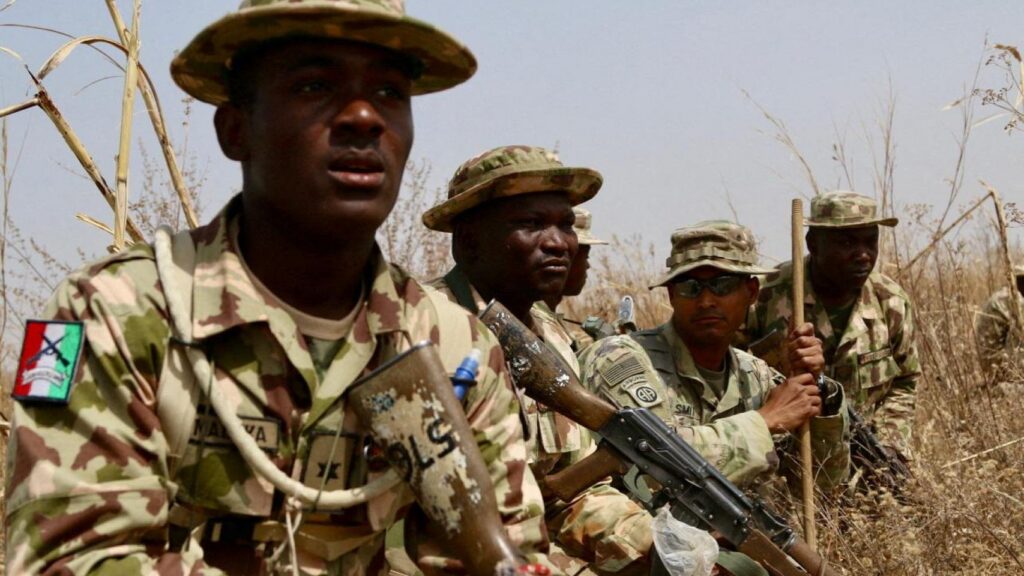
A hundred United States soldiers landed this Monday in Nigeria with the declared mission of combat the Islamist insurgency of Boko Haram, the Daesh affiliate in West Africa and other fundamentalist armed groups that ravage the north of the country along with criminal gangs, known by the local population as “bandits” and dedicated to kidnapping and illegal mining.
As explained by the spokesperson for the Nigerian Defense Headquarters, Major General Father Samuelthe US military deployment is the result of collaboration between countries, and not of unilateral impositions. The North American troops, who landed at an airfield in the northeastern state of Bauchi, will train and advise their forces, without entering into combat or directing operations against the insurgents.

“US personnel are technical specialists who act strictly as advisors and trainers. They are not combat forces,” General Uba said in a statement on Monday, in which he stressed that “all training activities will be carried out under the authority, direction and control of the Nigerian Government, and in close coordination with the Nigerian Armed Forces.”
The Ministry of Defense spokesperson celebrated, in this regard, that military collaboration with Washington “will provide access to specialized technical capabilities aimed at strengthening Nigeria’s ability to deter terrorist threats and improve the protection of vulnerable communities throughout the country.”
Abuja hopes that another 200 additional troops will arrive in the coming weeks because, as he acknowledged this week Sunday Darethe president’s spokesman Tinubu Ballthe African country needs “massive support from the United States Government” in terms of ammunition and combat aircraft, two of the weak points of its Armed Forces.
The military deployment occurs less than two months after Donald Trump ordered to bomb a camp controlled by an Islamist armed group of Malian origin known as Lakurawa. The operation, shrouded in secrecy, hit the village of Jabo, in Sokoto, a Nigerian state bordering Niger, another Sahel country besieged by fundamentalists.
Trump prepared the groundwork for months to launch the attack on Africa’s most populous country. His administration boldly accused the Nigerian authorities of leaving Christians in the north of the country unprotected, who suffer daily attacks from Boko Haram, the Islamic State branch and organized crime gangs.
The tenant of the White House and his entourage reproduced for weeks the version that a “genocide” against Christians was taking place in Nigeria. An unfounded accusation that Abuja tried hard to deny.
“Insurgent groups such as Boko Haram and ISWAP often present their campaigns as anti-Christian, but in practice their violence is indiscriminate and devastates entire communities,” he explained in November. Ladd SerwatPrincipal Africa Analyst for ACLED.
“Islamist violence,” the specialist stressed in conversation with EL ESPAÑOL, “is part of the complex and often overlapping conflict dynamics in the country, which include struggles for political power, land disputes, ethnic issues, sectarian affiliations and banditry.”
General Uba acknowledged, however, that the US military presence in Nigeria responds to a request made by his own Government. In fact, since the Christmas Eve bombing, a small group of American soldiers have provided on-the-ground assistance to Nigerian forces to strengthen their intelligence capabilities, as confirmed in January by the United States Africa Command (AFRICOM).
You may also like
-
The Congress of Peru dismisses President José Jerí after only four months in office for failing to fulfill his duties
-
Turtle in danger VIP receives urgent help from airline: Rescue after fierce storm
-
Four arrested for the death of an ultra in Lyon, one of them an assistant to a deputy from Mélenchon’s party
-
The US destroys three other boats in the Pacific and the Caribbean that it accuses of drug trafficking and leaves 11 dead
-
relatives on hunger strike while prisoners “are forced to eat”