
The keys
nuevo
Generated with AI
nuevo
Generated with AI
In August 2024, a student revolution supported by the Armed Forces put an end to the fifteen years of authoritarian government of the prime minister Sheikh Hasinaone of the two daughters of the founder of Bangladesh, Sheikh Mujibur Rahmanwho survived the murder of their father and several members of their family in the military coup of 1975.
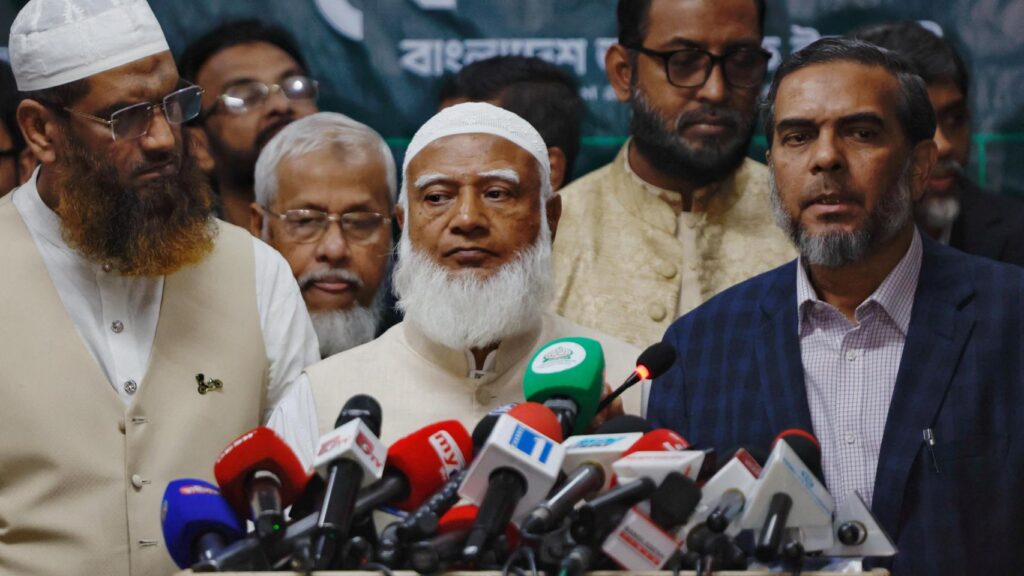
Eighteen months after the Monsoon Revolution, the country is holding elections overshadowed by the rise of the Islamists of Jamaat-e-Islami, who lead a broad coalition that includes the National Citizen Party (PNC), whose seed, the Students Against Discrimination movement, was the protagonist of the social outbreak that Hasina tried to quell through a brutal campaign of repression that claimed the lives of 1,400 people, according to the count. the UN.
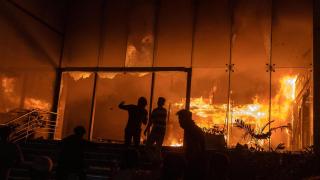
But many harbor hope in the uncertain democratization process led by the Nobel Peace Prize winner. Muhammad Yunuswhich led to the legislative elections on Thursday, in which more than 1,900 candidates competed for the 350 seats at stake in Parliament.
None of the contenders represents the acronym of the Awami League, Hasina’s party, banned in the new Bangladesh. Their militancy is divided between exile and prison, a factor why many question the democratic integrity of the elections.
Given the exclusion of the Awami League, there are only two candidates who have options to head the next Government. The big favorite is Tariq Rahmanheir to the country’s other great political dynasty and leader of the Bangladesh Nationalist Party (BNP), persecuted during the Hasina era. Behind figure Shafiqur Rahmanleader of Jamaat-e-Islami, another party banned in the old regime.
Tarique Rahman predicted this Thursday “a landslide victory” for his BNP. He confessed in statements to the BBC that he had been “waiting for this day for more than a decade.” Scion of the former prime minister Jaleda Ziathe first woman to hold the position in the history of Bangladesh, who died in December, Rahman decided to leave the country seventeen years ago. Hasina’s fall caught him in London.
Also imprisoned during the Hasina regime, her rival Shafiqur Rahman advocates an anti-corruption crusade. For this reason, the Islamists have managed to raise the banner of Justice and institutional cleanliness, and boast of having modernized the party’s acronym thanks to their alliance with student activists.
“Jamaat’s alliance with the PNC is strategic: it seeks to attract tech-savvy Gen Z voters and project an image of inclusion beyond its Islamist core,” the researchers write. Saim blushed y Taufiq E. Faruque in the magazine East Asia Forum. In any case, they have not even bothered to remove the intention to establish Sharia law from their party’s statutes.
Furthermore, among the more than 200 candidates presented for the legislative elections, there is not a single woman. Their PNC partners were only allowed to present two of the 30 candidates that corresponded to them. Not in vain, Shafiqur Rahman has come to equate women’s work outside the home with practicing prostitution.
It is true that the BNP does not improve its record much. Among the 250 candidates of the center-right party there are only ten women.
Tarique Rahman criticized Shafiqur Rahman for using faith as a political weapon, but his campaign attempted to appeal to religious minorities and Sufi-leaning Muslim sects with the intention of compensating for the possible loss of votes on his right to the Jamaat ranks. Also to the secular sectors of civil society, a source of votes for the banned Awami League.
There is the possibility that both blocks collaborate or even govern in coalition. It wouldn’t be the first time. In the 1990s and early 2000s, the Islamists were the junior partner in a coalition led by the BNP. Although without the presence of the Awami League, the dynamic of cooperation can give rise to direct confrontation.
“Jamaat is capitalizing on the BNP’s reputational drag, particularly persistent media accusations of corruption and extortion by its activists,” write Saimum and Faruque. “Meanwhile, the BNP has sought to counter Jamaat by underlining the latter’s historic collaboration with Pakistani forces during the 1971 Bangladesh liberation war.”
Count in progress
More than 120 million people—of which around 48 million do not exceed the age of 37— They were able to exercise their right to vote this Thursday in Bangladesh, the seventh most populated country on the planet.
In addition to the legislative ones, Bangladeshis voted in a constitutional referendum on the package of post-revolutionary reforms known as the July Charter, which seeks to lay the foundations for the return of democracy.
UN experts warned this Thursday of the “tsunami of misinformation” that had arisen on election day, and denounced the electoral climate of “growing intolerance, threats and attacks.” Nothing that would alter the course of the vote, however.
The count continued after the closing of the polling stations, but the electoral commission will not publish the result of the vote on which the fate of 172 million souls depends until this Friday.
As soon as the authorities confirm the winner, Yunus will step aside. At 85 years old, the Nobel Peace Prize winner took the reins of the country after the fall of the Hasina regime. He surrounded himself with academics and civil society leaders to form a technical interim government capable of stabilizing the situation.
Your mission ends today. After exercising his right to vote, Yunus assured that the country had “ended the nightmare and begun a new dream.”
Sentenced to death in absentia for crimes against humanity, Hasina denounced, instead, that the electoral “farce” was “illegal and unconstitutional.” “A government born of exclusion cannot unite a divided nation,” he lamented from his exile in India.
You may also like
-
Trump continues with his denialist agenda: annuls the ruling that established that greenhouse gases are harmful
-
Polar bears healthier than 25 years ago: surviving despite loss of sea ice.
-
is ahead of his aunt, the ‘Sweet’ Kim Yo-jong
-
reinforces its offensive against crime and will increase security in prisons
-
Zelensky honors the Ukrainian athlete banned from the Olympics for wearing a helmet with the faces of war victims